Admittedly, I do somewhat enjoy the occasional food coma once in a while. It can be rather pleasant to drift off into a sleepy haze after a meal.
However, sometimes there are things that need to be done, and what was supposed to be a brief doze can drag on for 2-3 hours. Forcing yourself to work while drowsy is so frustrating.
There is plenty of advice on how to avoid a food coma. You know, eat smaller portions, decrease the carbs and the fat, and so forth. But, let’s say you already went ahead and ate the trigger foods and are on your way to la la land. What now? How does one stop the food coma once it has already begun, without resorting to caffeine?
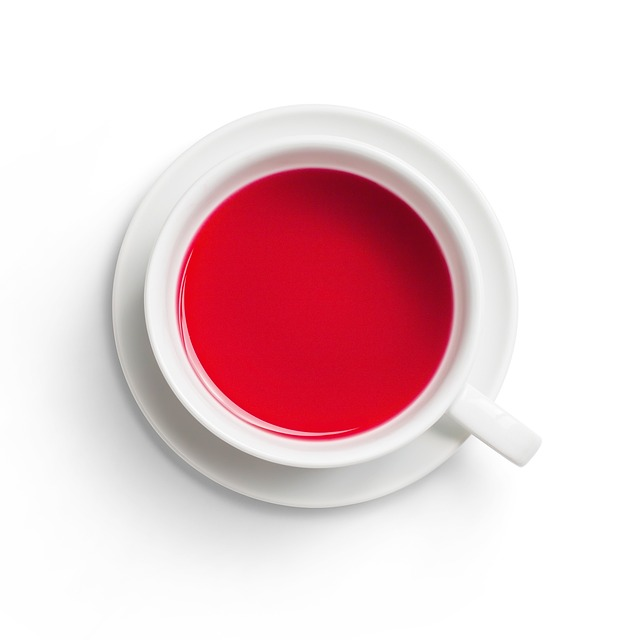
Fortunately, I learned that a glass of ruby-red hibiscus tea will clear the fog of sleep and bring me right out of that slumber in short time!
Someone I know shared this trick with me years ago. While I can’t say exactly why it works, I do have a pretty good idea why it does (based on science).
What causes food coma?
Strangely enough, scientists have not made much progress into what causes postprandial somnolence, which is what food coma is formally called. You can find studies showing that drinking caffeine in the afternoon keeps you up at night, yet an official cause for food coma is still a matter of debate.
Go figure.
That said, there are several theories circulating regarding what causes food coma. Here are some, in no particular order.
Theory 1: Food coma is caused by the sudden spike in blood sugar after having a meal high in simple carbohydrates.
Theory 2: More blood flows to the gut after a meal, thereby reducing blood flow to the brain – this one has been debunked.
Theory 3: The sleepy state is brought on by consumption of tryptophan-rich foods.
Theory 4: Various peptides, or digestive hormones, are released with fatty or protein-rich meals, causing satiety and sleepiness.
Theory 5: We get sleepy because digestion is monopolizing our energy.
Theory 6: Overeating brings about food coma, possibly due to reasons described in Theory 1, Theory 4, and Theory 5.
Personally, I believe that it’s possible for food coma to be caused by a number of factors, so it’s possible that more than one of these theories could be correct. I found a study on two people whose lives were seriously impacted by food coma, and they were successfully treated after taking antidiabetic meds. Theory 1 is therefore supported. On the other hand, there are many anecdotes of people eating low glycemic meals like eggs and meat, with no carbs whatsoever, yet still experiencing food coma (look in the comments of the linked video). Perhaps Theory 3 is supported in this scenario?
I think that Theory 1 supports why hibiscus works, and I’ll get into why below.
Hibiscus lowers blood sugar
And now we come to the mechanism by which hibiscus probably works: lowering blood sugar. That’s right; hibiscus most likely works by decreasing glucose levels brought on by blood sugar spikes. According to Dr. Tim Bond:
“Various polyphenolic compounds are found in hibiscus tea. Ferulic acid is one such that appears to reduce blood glucose by reducing insulin resistance and levels of pro-inflammatory compounds in the blood. Other polyphenols in hibiscus may inhibit the enzymes that break down carbohydrates, thus delaying the breakdown of carbohydrates to glucose and lowering blood glucose.”
It seems that my theory is correct. However, if someone is getting food coma for another reason, hibiscus tea might not work. If you have food coma and have pinpointed a reason other than blood sugar causing it, try the hibiscus tea and come share if it still worked for you.
Making the tea
While there are many types of hibiscus, the species most commonly used for tea-making is Hibiscus sabdariffa, also know as roselle.
You may be confused by the large, light petals. They do not resemble the crumpled up, burgundy pieces in the typical bag of dried hibiscus. The part of the flower used is actually the fleshy red calyx, or the bottom part of the flower.
I don’t use any special recipe to make the tea. I usually make it as follows:
Small handful of hibiscus
Two cups of hot water
Leave to steep until the tea has almost cooled. By then, it will have developed the characteristic, beautiful, deep red color. Though the brew is quite tart, I do not take it with sweetener. You can, of course, sweeten it, but I don’t know if it will have the same effect.
Disclaimer: I am not doctor, and nothing here is intended as medical advice.